The Long Summer
As a child, you didn’t understand it. I lived in constant fear and anxiety, never knowing when my father would explode. I hated seeing the sun rise, and I dreaded the evenings, waiting for him to come home. The inconsistency was unbearable — the constant tremor of fear ran through me day and night.
But one summer, my father sent us to live with our grandmother, his mother. She had property in northeast Indiana along a large lake. Several old mobile homes dotted the land, most in disrepair, most still with outhouses attached. There was no running water anywhere.
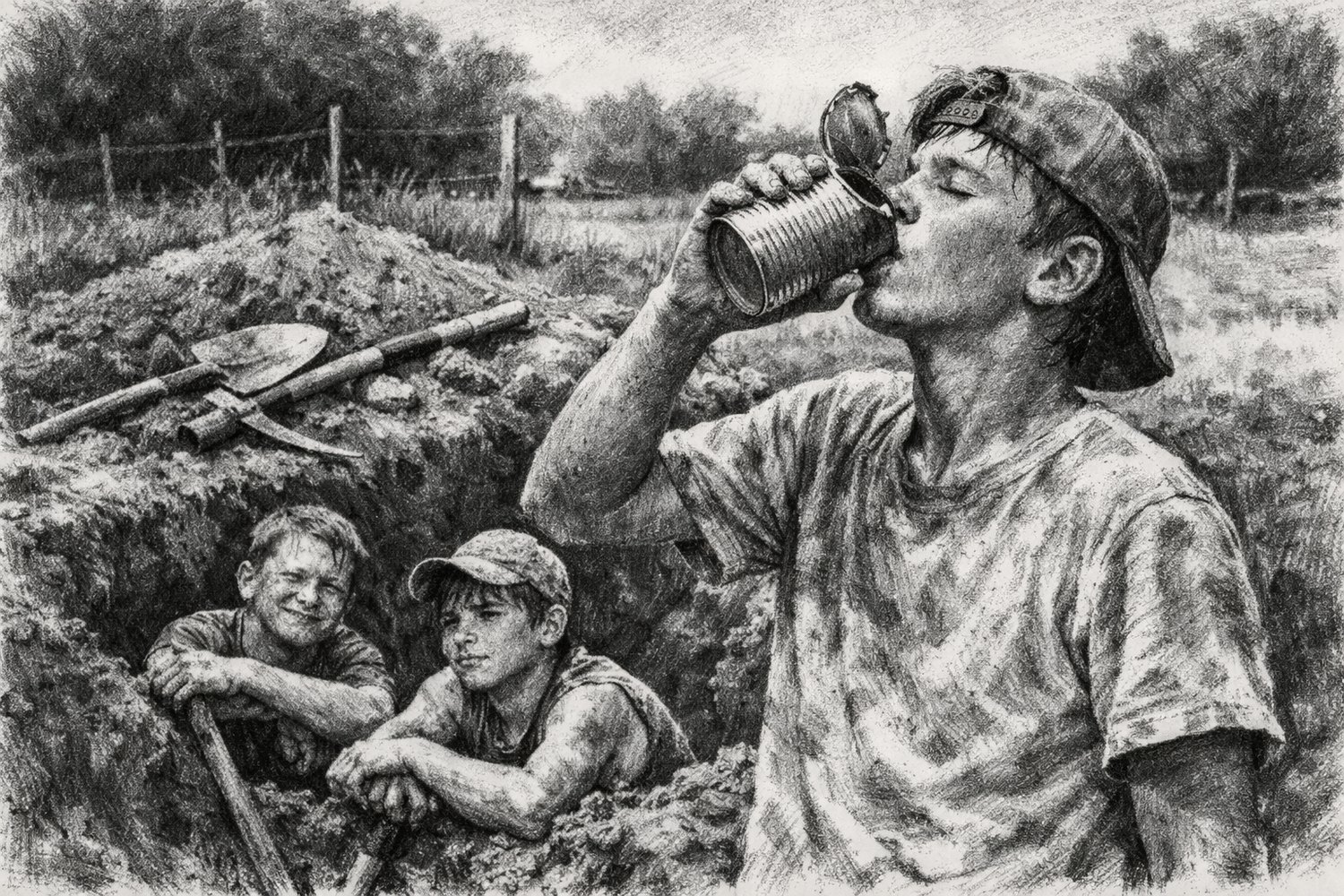
Our job that summer was grueling: to dig trenches three feet deep so the pipes wouldn’t freeze in the harsh Indiana winter. We dug all day, seven days a week, trenches 36 inches deep.
Grandmother sat in a lawn chair, holding a switch. If we didn’t work productively, we were switched. There was no conversation, no laughter. Just work — hard, relentless labor, like being on a chain gang.
Our food was simple and scarce: hominy. She opened the can with a manual can opener, leaving sharp edges. That became our drinking cup for the day. Water was ladled out as needed, but we worked without pause.
As I dug those trenches, I often reflected on my father’s childhood — what he must have endured, and how it shaped both his strengths and his weaknesses.
It was a long summer. But the one good thing was consistency. We knew the day’s expectations. We knew the consequences of slacking. There was no fear of sudden explosions, no trembling anxiety. Just work. And that structure — harsh as it was — brought a strange sense of security and safety. Knowing what the day would hold, without the terror of unpredictability, was a blessing.
I want to encourage you, as you read this story, not to feel sorry for me. Instead, in your own hearts, decide to have a balance in your life. As you invest in your children or grandchildren, hard work is a necessity. I believe that with all my heart. The lessons learned are invaluable. They don’t exist in society as much as they should.
But balance hard work with compassion and grace, and above all, consistency. Let your words have truth when spoken. Do not be inconsistent. Balance your child’s life with love, affection, and effort — and the discipline of hard work. That is how you build character and prepare them for life.
Nuggets of Wisdom
- Consistency in structure and expectation brings safety and trust.
- Hard work, balanced with love and compassion, shapes resilient character.
- Teach with both truth and grace — children learn from example more than words.
Proverbs
- “Train up a child in the way he should go; even when he is old he will not depart from it.” — Proverbs 22:6
- “The wise woman builds her house, but the foolish tears it down with her own hands.” — Proverbs 14:1
- “Commit to the Lord whatever you do, and your plans will succeed.” — Proverbs 16:3
This story has a workbook — how to use it with the person across from you, and the point of it. Read the workbook for The Long Summer · All the workbooks.