Thomas
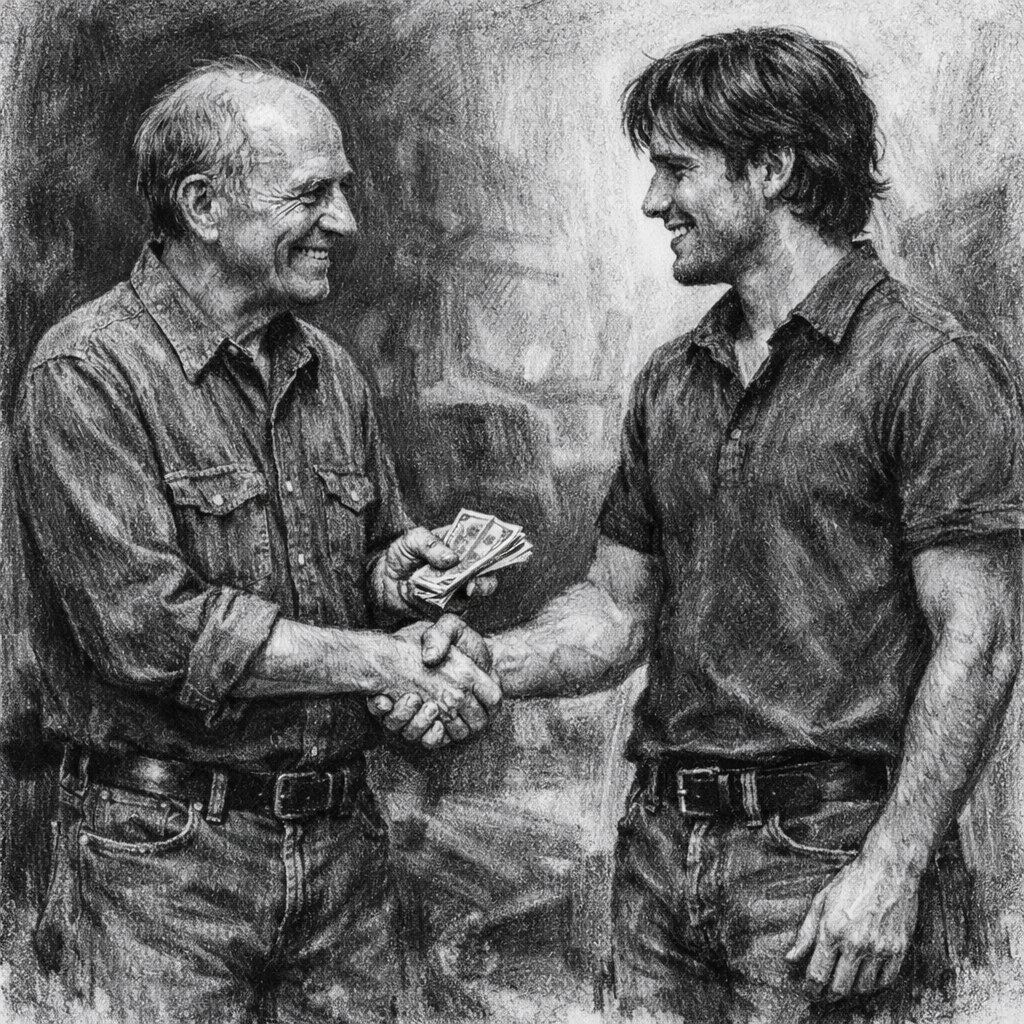
In my early twenties, I had just finished the Marine Corps. I was a single parent with a six-month-old daughter. Survival meant doing whatever honest work I could find. I would set up a playpen in the yard so I could keep an eye on her while I did painting and odd jobs for people. I had no family around to help, so we figured life out together.
One day someone asked if I knew how to roof.
I said, “Certainly.”
The truth was, I had never roofed before. That night I went to the library, checked out books, and studied until late, learning everything I could about how to roof a house. The next day I measured the roof, bought the materials, tore off the old shingles, and started roofing.
That moment turned into something bigger than I ever imagined. What began as survival work slowly grew into a roofing business that lasted about twelve years. Eventually I went on to get my general contractor’s license and moved into building, grading, and excavation.
But those early years were hard.
Finding a place to live, managing employees, trying to make payroll, and keeping cash flowing was a constant battle. Banks would not loan money to a man in his early twenties who had no college degree, was self-employed, and had no two-year income history or tax records to prove stability.
There was no safety net.
During those years I bought my roofing materials from a company called Schumann Owens. The man behind the counter was Thomas.
Sometimes I would walk in and tell him the truth.
“Thomas, I can’t make payroll.”
He would look at me calmly and say, “Write me a check.”
He knew there wasn’t money in the account yet. He would hold the check until I could cover it. I would pay the bank charges and a fee for the favor. But it gave me time. Time to finish jobs. Time to get paid. Time to keep my crew working.
It was his way of having security. He knew I wasn’t going to walk away from the debt.
It was essentially a handshake.
Thomas was a kind and man, but he was also a man of standards. I watched him run people out of his store when they acted dishonestly. He could chew someone out pretty hard if they lacked integrity. He expected ethical conduct, and he didn’t compromise on that.
But he also knew how to recognize character.
He saw how hard I worked. He saw how I treated my employees. He saw what I was trying to build.
And when no bank would give a young man credit, Thomas did.
I will never be able to repay that man. I’m certain he has passed on by now. I am long past those early years, but part of whatever I built in life traces back to a man who chose to trust character over paperwork.
I’m not recommending everyone do what Thomas did.
But I am recommending that people learn to judge character the way Thomas did.
Because sometimes the future of a man—or a business—hangs on whether someone is wise enough to see the difference between risk and character.
Nuggets of Wisdom
• Sometimes the greatest investment a person can make is not money, but trust placed in the right character.
• A wise man does not judge only by paperwork and titles. He learns to recognize integrity when he sees it.
Proverbs
Proverbs 20:11
“Even a child is known by his deeds, whether what he does is pure and right.”
Proverbs 22:1
“A good name is to be chosen rather than great riches, and favor is better than silver or gold.”
Proverbs 27:17
“As iron sharpens iron, so one person sharpens another.”
This story has a workbook — how to use it with the person across from you, and the point of it. Read the workbook for Thomas · All the workbooks.