The Constitution of the United States
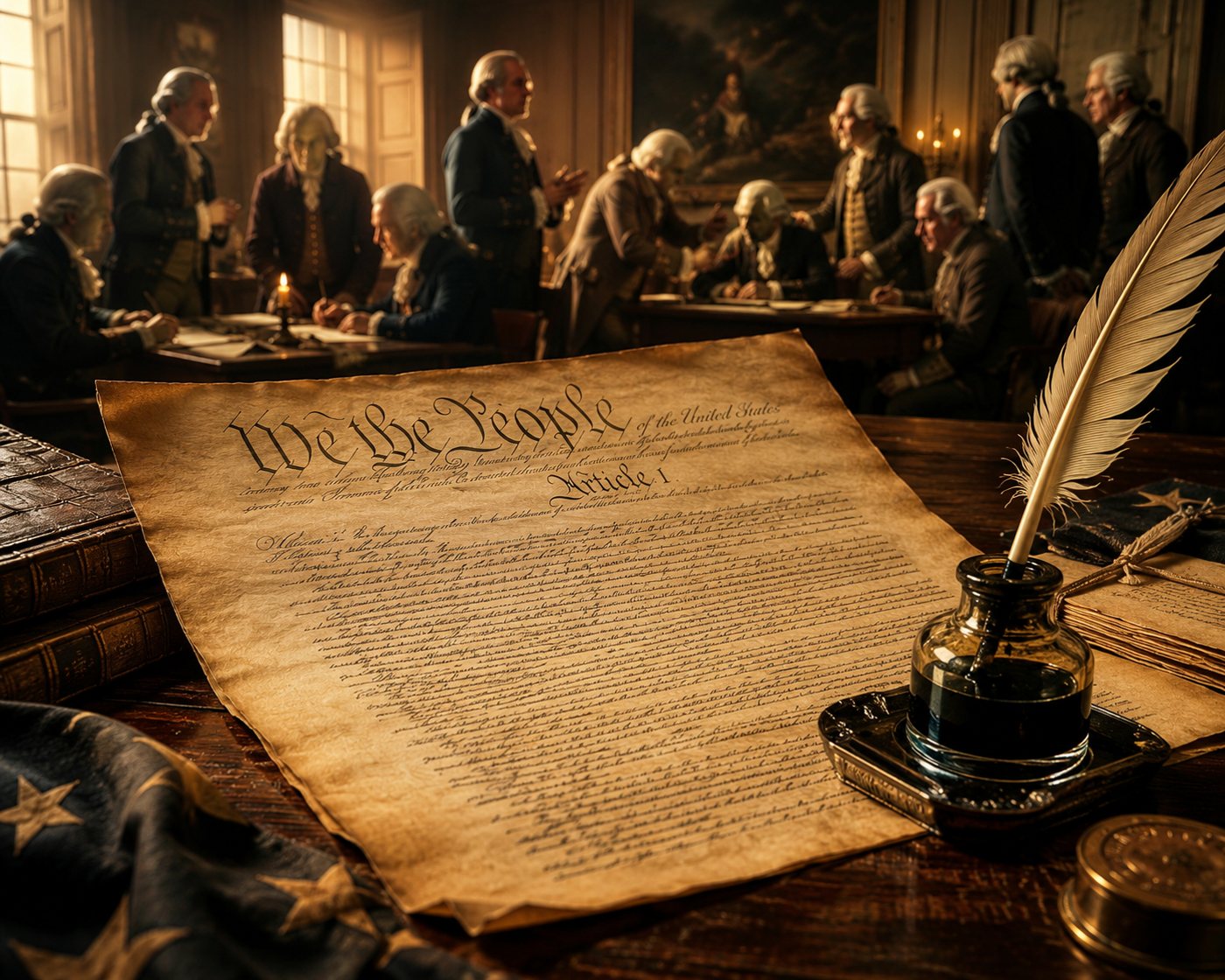
The men who gathered in Philadelphia in the summer of 1787 were not perfect. They came with different backgrounds, different interests, different opinions, and often disagreed passionately with one another. Yet they shared a common responsibility: to craft a document that would guide a new nation into the future. Their purpose was not to create a government that ruled over its citizens, but one in which the citizens governed themselves through laws they established together. They sought to limit the concentration of power, divide authority among separate branches of government, and ensure that no individual would ever stand above the law or become greater than the nation itself.
The Constitution is both powerful and remarkably fragile. It is not merely ink on parchment, but an enduring agreement that depends upon the character, wisdom, and vigilance of each generation. For nearly two and a half centuries, it has provided the framework that has preserved liberty, resolved disagreements through law instead of force, and allowed the nation to adapt while remaining rooted in enduring principles. Its continued strength has never been guaranteed. It survives only when citizens understand its purpose, respect its limits, and remain committed to preserving it for those who follow.
Every member of the United States military, along with many public servants, swears an oath to support and defend the Constitution of the United States. That oath is not made to a political party, to an elected official, or to any single individual. It is a solemn promise to defend the principles upon which the nation rests. Every citizen shares a responsibility to understand the Constitution, to teach its importance to the next generation, and to preserve the liberties it protects. A free people cannot depend upon others to safeguard their freedom. The Constitution endures only when it lives not merely on paper, but in the hearts, minds, and actions of the people it was written to serve.