ACCOUNTABILITY
The Cost of an Oath
No American should be asked to die unless the cause is truly in the national security interest of the United States. Not one flag-draped coffin should return to the shores of this nation unless that is the truth.
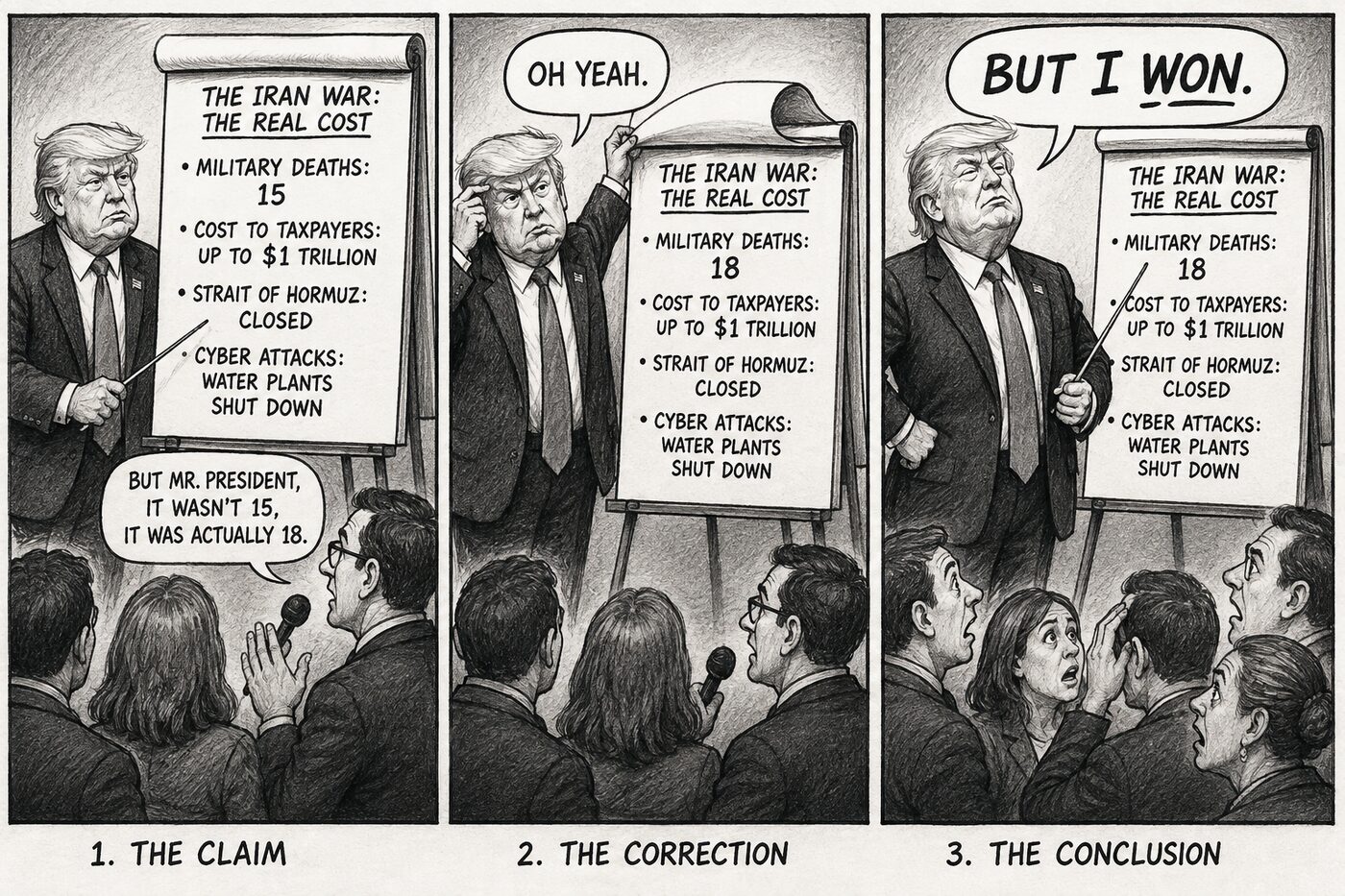
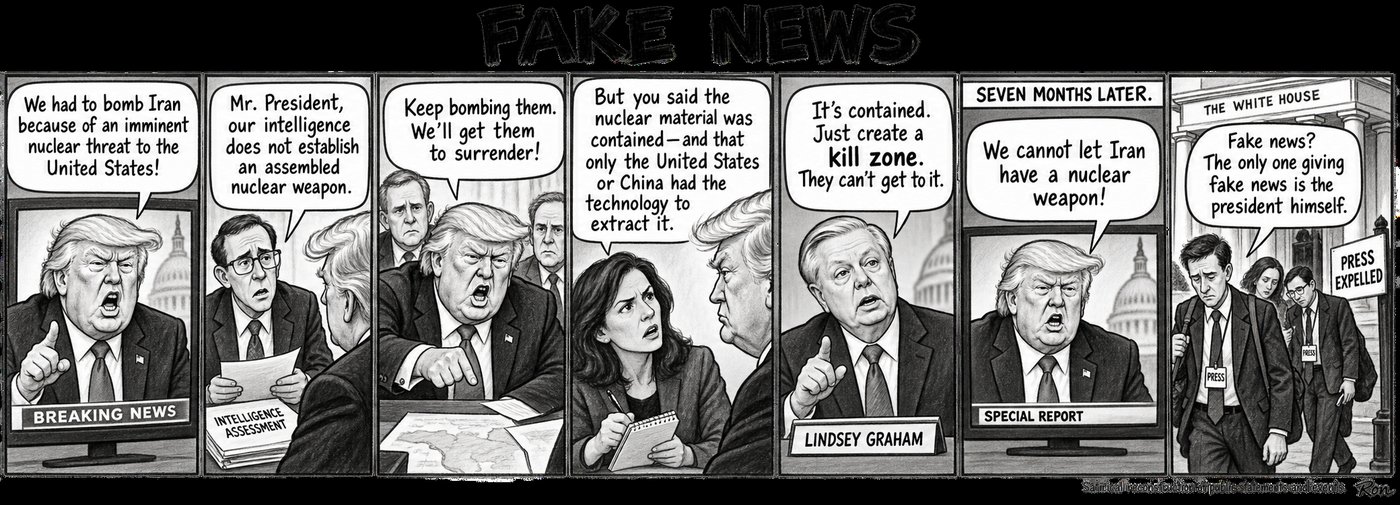
President Trump himself acknowledged that much of Iran's enriched uranium had been buried by the American attack. When asked whether the United States needed an agreement with Iran to recover it, he replied, "No. It's entombed." He said Iran could not reach it and that American forces had considered retrieving it but chose not to because of the risks and complications.
That leaves the American people with a question that must be answered: If the nuclear material was entombed beneath a mountain and could not be retrieved by Iran, what was the probability that it presented an imminent nuclear threat to the United States?
Every time a flag-draped coffin comes home, America owes that family an answer. Not a political slogan. Not a campaign speech. Not a promise that history later proves to be false. A truthful answer.
As a former United States Marine, I have watched too many young Americans leave home full of hope, only to return beneath the flag they once saluted. Behind every coffin is a mother, a father, a husband, a wife, children, brothers, sisters, and friends whose lives are forever changed.
That price is so great that it demands the highest standard of leadership.
War must never become a tool of convenience. It must never become an extension of political ambition, personal legacy, or private financial interests. The only acceptable reason to ask an American to sacrifice his or her life is because the security of the United States truly requires it.
History teaches painful lessons.
The Gulf of Tonkin Resolution drew America deeper into Vietnam based on events that remain heavily debated decades later.
The invasion of Iraq was justified in large part by intelligence that Saddam Hussein possessed weapons of mass destruction. Those stockpiles were never found. Thousands of Americans served honorably. Thousands never came home. Their courage has never been in question. The decisions that sent them there continue to be examined.
But the damage did not end when the fighting slowed and the coffins came home.
For years, Iraq and Iran had served as opposing powers that kept each other in check. When the United States removed Saddam Hussein and dismantled much of Iraq's government and military structure, we created a vacuum. Iran moved into that vacuum, building relationships with Iraqi political leaders and armed groups while greatly expanding its influence throughout the country and the region.
The lives lost in that war did not leave the Middle East safer. Instead, the removal of Iraq as a counterweight helped create the very Iranian power that America is now being asked to confront.
Those lessons should have made us wiser.
Today we again find ourselves watching events unfold in the Middle East. American aircraft carriers move into position. Military aircraft deploy. Missiles are launched. Families wait beside telephones. Marines, soldiers, sailors, and airmen prepare themselves to do what America asks them to do.
They deserve to know that every decision placing them in harm's way has been made for one reason alone: the defense of the United States.
That standard becomes even more important whenever a president or the president's family maintains significant private business relationships or financial interests connected to the same region where American military force may be used. Whether any particular decision was influenced by those interests is a question that cannot be answered by assumption, accusation, or political rhetoric. It deserves careful, independent examination supported by evidence.
In a constitutional republic, accountability is not an act of disloyalty. It is an act of patriotism.
The greatest strength of America has never been blind trust in its leaders. Our strength has always been our willingness to ask difficult questions before more names are carved into monuments and more folded flags are handed to grieving families.
If investigators conclude there was no improper influence, the American people should know that. If they find evidence that private interests affected public decisions, the American people deserve to know that as well. Either outcome strengthens the Republic.
Our military does not belong to any president. It does not belong to any political party. It does not belong to any corporation or business enterprise. It belongs to the American people.
The young Marine standing post tonight did not swear an oath to protect someone's investments. The Army sergeant boarding an aircraft tomorrow did not volunteer to improve someone's balance sheet. The Navy sailor crossing the Strait of Hormuz did not enlist so another business deal could succeed.
They raised their right hands to defend the Constitution of the United States.
We owe them leadership worthy of that oath.
The question is not whether we support our troops.
We do.
The question is whether we are willing to demand from every president—Republican or Democrat—that before another American life is risked, the nation can honestly say:
This war serves America.
Nothing less is worthy of those who come home beneath our flag.
— Rollin E. Trueblood, USMC (Ret.)
The cartoons